Since its establishment, HIAST has adopted unique criteria which gave it a distinguished position among Syrian universities. These criteria include
Selecting students with top high school marks.
Admitting a limited number of students.
A highly qualified staff.
Implementing modern teaching methods which promote reasoning and creativity.
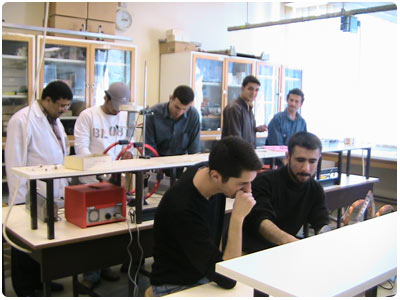
Integrating theoretical and practical aspects of the course in terms of content and teaching hours.
Effective teaching of foreign languages.
Regular assessment and evaluation of students’ progress.
Up-to-date and flexible curricula.
These criteria enabled HIAST graduates to achieve top ranks as postgraduates at European universities and as engineers in actual work conditions.
The five study years are divided into two stages:
The core curriculum, in which basic subjects (languages, mathematics, physics, etc) ate taught.
The specialization stage, in which students are divided into various specialties.
Specialties
Specialties vary according to the latest technological developments and the demand for engineers from other institutions catered for by HIAST. However these specialties adhere to the basic framework and strategy of qualifying engineers which HIAST adopts. Nowadays, the following specialties are available:
Communication Engineering started in 1996 – 1997
Mecatronics: started in 1996 – 1997
Tuition Fees
100,000 SP for the first and second year.
125,000 SP for the third, fourth, and five year.
Top ten high school students are exempt from tuition fees throughout their study period, on condition they do not fail.
Top hundred high school students are exempt from first year tuition fees.
Other exemptions:
A student who comes first (first, second and third year) and a student who comes first in his specialty (fourth year) will be exempt from tuition fees for the following year, provided his/her average is not bellow 70%.
A student who comes second is exempt from 40% of tuition fees for the net year.
A student who comes third is exempt from 30% of tuition fees for the next year.
Research and development at the Higher Institute for Applied Science and Technology
HIAST gives special significance to research and development, which is carried out in the different departments and laboratories:
Department of Informatics.
Department of Communications.
Department of Electronic and Mechanical Systems.
Department of Mathematics.
Department of Physics.
Department of Management.
Environmental Studies Laboratory.
HIAST is concerned with developing scientific knowledge through high-level research projects, in addition to engineering and development projects which meet the needs of the different economical sectors in the country.
These projects cover a wide range of topics such as:
Designing software for public institutions and banks.
Designing software that helps in decision making.
Improving performance in production lines.
Evaluating the performance of solar energy models.
Making electronic systems.
Analysis and comparison studies of materials properties and mechanical structures.
Making the sun and wind atlas of Syria.
Earthquake detection.
Weather sensors.
Mechanical sensors.
Analysis and synthesis of speech in Arabic.
Automatic error-correction based on Arabic grammar.
Recognition of Arabic and Latin letters.
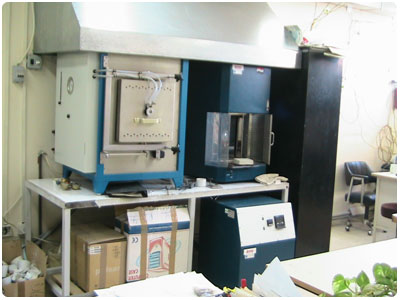
Developing technical laboratory equipment.
Research in theoretical Physics.
HIAST has a long experience of scientific cooperation with various local and international institutions in order to be informed about the world predominant scientific currents, and to keep the knowledge of its teachers up to date.
The scientific cooperation at HIAST based on:
Inviting teachers and exerts from foreign countries to give lectures in specific topics.
Participating in organizing local and international conferences, and publishing some HIAST projects and studies in international conferences.
Sending students aboard to study and follow training courses in different fields.
Participating in international projects, particularly with the European Union.
Obtaining scholarships offered by UNECO, ESCWA, and UNDP, which are always concerned with implementing projects closely related to education in Syria.